Episode Transcript
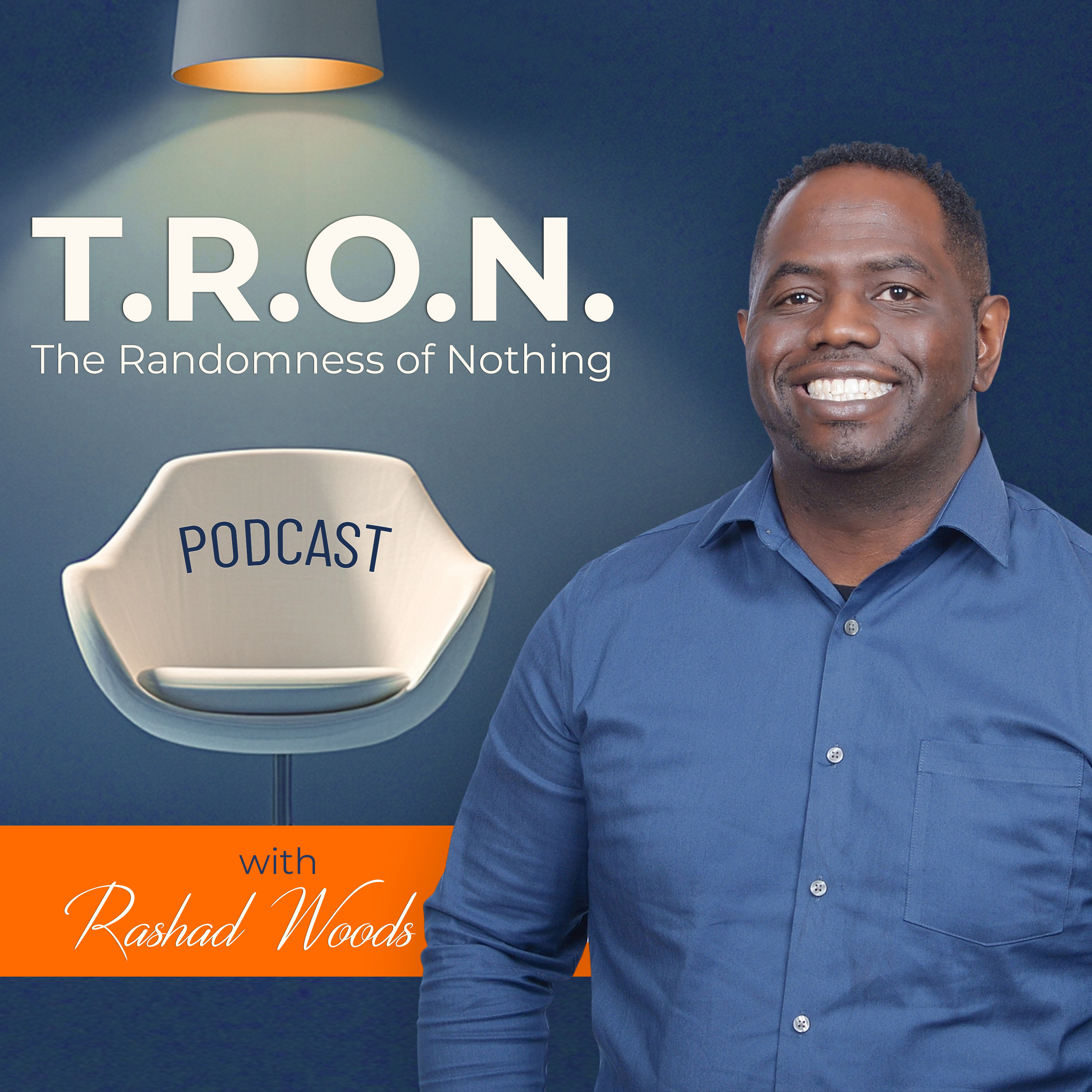
[00:00:01] Speaker A: Welcome listeners of the Tron podcast, the Randomness of Nothing. This is your host, Rashad woods. And this is one of the most special interviews I've had the honor and pleasure of having today. She's a speaker host of her own podcast, best selling author, all around positive, great person, Dr. Marissa Pay. Thank you so much.
[00:00:22] Speaker B: Thank you for having me.
[00:00:24] Speaker A: This is, this is, this is really special and I'm glad you carved out time out of your busy schedule and, and you have such an inspiring story and you've done so such wonderful work throughout the course of your career. And you did it from a background, you know, of humble means, you know, from coming from Canada. So please, can you talk a little bit about yourself?
[00:00:42] Speaker B: I guess Canada is humble.
[00:00:44] Speaker A: I don't know, my wife is Canadian, so I certainly didn't mean like Canadian.
I just saying, you know, from such a humble background.
[00:00:52] Speaker B: What, where in Canada is she from?
[00:00:54] Speaker A: Just us, just outside of Windsor. Just outside of Windsor, Ontario?
Yeah.
[00:00:59] Speaker B: I'm just outside of Toronto, in Kitchener. Waterloo. That's where I was.
[00:01:04] Speaker A: Beautiful, beautiful area.
[00:01:08] Speaker B: Yeah. The story is my father was a chemical engineering graduate student at McGill. He got two job offers to be a professor, one at Berkeley because one of his professors was teaching Tien, who became the chancellor, and one from University of Waterloo, biggest chemical engineering school in Canada.
And it was 1960. He turned the TV on, saw burning of bras and acid and, you know, sex, rock and roll. And my father's extremely nerdy. And so he. That's how I ended up being born in kitchen or water.
[00:01:50] Speaker A: Understandable, understandable.
And, you know, that's what I found fascinating about your story. And I always let everybody tell theirs as opposed to me telling. It was, you know, your story was, you know, self confidence in growing up and being able to find the better version of your true self. And then eventually you parlayed that into helping other people. So can you. Are you able to talk about that background of yours and how that really turned you into the positive transformation person that you are?
[00:02:15] Speaker B: Absolutely.
I was born into a pretty traditional Chinese home and you know, tiger mom. It's a stereotype, but there's always truth to stereotypes. So achievement was number one in that culture. There's also something I call negative motivation.
So in order to raise your kids or your daughter in particular, to be the best she can be, you, she would say, you're fat, you're ugly, you're clumsy, you are, you know, not all that in the extreme as a means or a motivation to make sure I didn't become fat, ugly and clumsy. So these days that does qualify for childhood trauma. And there was a, you know, also, you know, peppered with well meaning, sometimes more mean than well, actions in correction and things like that. So I would say I'm one of the seven out of ten of us who've had childhood trauma. And that set me on this course where achievement was everything. So I was the youngest to this and the first for that. And that was how I thought I could have love. And so I became a professor like my father. I got a doctorate in organizational psychology. I have two masters. And then I was teaching at UCLA in the business school.
I did some consulting work in Europe and began teaching grad school there.
[00:04:07] Speaker A: Wonderful.
[00:04:08] Speaker B: I, you know, I was, I was a good daughter in that sense. And I was, I chose a man who didn't like to work and also carried on the theme of, you are not attractive, you're not desirable. He would introduce me to his friends behind my back as obese. And I was probably about this size.
So it was not his fault I picked.
But it is normal for kids who come from childhood trauma to continue the habit of seeing themselves in the worst possible way by choosing mates who also were incapable of giving love the same way their primary whoever they grew up with. And they. That upbringing will lead many people to think that they are always going to be behind everyone else. So I have to catch up. I have to be. I have to get fixed.
They had a great childhood and it's not fair. I will have to work harder.
And it's a common Right, right and approach for people who've had that kind of background. And at some point I can remember saying, wait a minute.
If seven out of 10 of us have had childhood trauma and my honorable moniker, I was actually introduced to Oprah as the Asian Oprah. And she will say it's as high as 8 out of 10 who've had childhood trauma. And she has come out herself. And I credit her with bringing this whole okayness to talk about mental health and not mental health or illness, mental illness into the forefront. She'll say 8 out of 10. Some psychologists today say as high as 90 some percent. So at some point we have to ask the question.
And in your podcast, I read a little about that.
You know, it's about that whole rocking the, you know, the traditional bs.
[00:06:30] Speaker A: Yes.
[00:06:31] Speaker B: Stems and status quo.
[00:06:32] Speaker A: Absolutely.
[00:06:35] Speaker B: One of them, which is, if it is the majority, why do we think we're broken? We're the majority. I saw that has to be a reason for pain in Life there has to be a reason or a benefit to having this kind of treatment in life. Which is a very out of the box and completely blows up all of the paradigms and stereotypes and bs, right? Calling the BS the belief system that there's something wrong with us. That began me on a journey of looking at that and really looking at the benefits and the consequences of growing up thinking that I have to be fixed or I have to pull myself up by the bootstraps in order to pretend that it didn't happen.
Right. Although we all know that what you don't deal with will come back and.
[00:07:41] Speaker A: Deal with you without question.
[00:07:43] Speaker B: And that is the sort of the, the, the path that I took. So then I real when I realized this I began to speak in terms of not healing to be fixed. But there is power if you move through the pain, but you got to move through it and then pop out right into the power. And that began, became the impetus for my number one Amazon and national best selling book called 8 Ways to Happiness from wherever you are. Yes, Self help on steroids.
Not a book that you know is, is from the perspective of, of a psychologist telling you how to be happy, but from one of the seven out of ten of us who've had childhood trauma and has discovered a way to move from loneliness into hope, from heartbreak into love, from loss into faith, from beautiful control into happiness, from fear into freedom. So in all of those ways there is not just hope but we have the power that we've forgotten.
[00:09:05] Speaker A: Right.
[00:09:06] Speaker B: To choose our birth rate of happiness.
[00:09:12] Speaker A: I, I think one of the most amazing things that I saw was an interview you had from mutual host at Wonderful Jennifer Norman and she's. And you said suffering is optional. Right. And I was like wow. When you actually break it down to that. Right. So you to your point, we're all going to experience some sort of level of pain or trauma. It's inevitable. We're human and nobody. He's perfect.
But to actually stick in the suffering of it, that's the part where you have the option of it or not. And that's very important because then you'll realize that to your point, I'm not alone and sometimes social media or the media in general makes it, you know that you're just a unique person when in fact we are the majority of the population that is going to go through those things.
[00:09:51] Speaker B: Pain in life.
[00:09:53] Speaker A: And I thought that was a wonderful thing.
[00:09:56] Speaker B: Suffering is optional is what he is referring to. For those of you who didn't listen to that interview. I Am adamant about that because there's a BS that we grow up with that if bad things happen to you, then either you're being punished or you're very unlucky.
The book, great.
But it does hurt us if you say, why do bad things happen to good people? Best selling book.
That that leads you to think that bad things shouldn't happen, which is such a bullshitake. And again, you're right. The social media does. You know, you don't see the bad things unless it's scandalous, then it's bad. But correct.
[00:10:44] Speaker A: Correct.
[00:10:45] Speaker B: Happen to everybody. There's not one person who, who can escape bad things because it's a part of life. And the sooner we recognize that bad things are like a chisel. And so we. If we're a rock, right, with sharp edges, dull edges, no shape or form, and there's a chiseling of life.
Right. It's not a punishment. I don't even like it when people say, well, I have to learn the lesson. No, that means you're being punished. That means you're not getting it. No, there's always some good that will come out of any kind of pain. We just have to embrace. And when it happens, don't do a bypass and go, oh, that's so great. No, it sucks when you get two blood clots that mean you cannot fly for a year. It sucks when, when you lose a job or it sucks when someone betrays you. And if you go, oh, like serenity now, like George Castan's father did in Seinfeld. That's. That's hockey. I mean, that's. You're human.
[00:12:01] Speaker A: Yeah.
[00:12:02] Speaker B: You have negative emotions for a reason.
The more you can get in touch and feel fully those negative emotions, then like a dumb waiter, you can also feel the Thai emotions. Exhilaration, excitement, orgasmic happiness. You know what, that high stuff, you can't feel if you're not feeling what's below.
[00:12:25] Speaker A: Right.
[00:12:26] Speaker B: So sea level is fine and then.
[00:12:29] Speaker A: Right.
[00:12:30] Speaker B: You can go right. Up and down.
[00:12:33] Speaker A: Absolutely.
It's tough not to get caught in the extremes, Right. Because we're kind of slaves to our emotions. Right. And so, you know, you typically get criticized too much if you just plow through trauma, but at the same time, when you wallow in it too long, it's like, hey, at some point you have to dig yourself out of this. What exactly is the best practice to actually find that happy medium? And is there a right or wrong answer to that?
[00:12:57] Speaker B: Whatever feels the best.
That's my rule. It has always been my Rule.
If it feels good to wallow, then wallow. At some point you're gonna get sick and tired of your own sick and tired and you're gonna say, okay, you know, you know, nobody wants to talk to me anymore. I smell right? I'm in debt. I, you know, my, my bathrobe is gray and it was painful for, you know, there's, at some point, we're human beings who have a natural love. We are born creative, we are born to explore, we're born curious. We're born with unique talents without question abilities.
So you know, is it working for you? I ask that question all the time. Is it working for you? If it's not working for you, then it's time to change.
[00:14:00] Speaker A: Okay, I thought, absolutely, go ahead.
No, I said I thought that's a wonderful thing to say because you have too often that, you know, there's, oh, you need to do this, oh, you need to do that. But that's not specific to you. Right.
[00:14:11] Speaker B: And how you're feeling, your stuff. Right.
And this is a Gen Z thing. I was just interviewed by a Gen Z and I loved his question was, you know, if you have any advice for Gen Z's who, you know, it's like they take everything so personally whereas the baby boomers didn't take anything personally maybe that they should have. Right. So, so where is that balance? And again it is if you have a set point and you know that your life, that dash from birth to death is the only one we're going to have that we know of. Shirley Mlan I don't know. However, I do know that this is non renewable energy.
Every single day that goes by, I cannot get back. Right? No matter what I do, it's over. So I'm going to take every day and I have a choice.
[00:15:09] Speaker A: Every single day, without question, without question.
[00:15:11] Speaker B: I can wake up and say I want to feel good for as much of this day as possible.
Yes, 88% of the time I want to feel good. So when I start doing this in the morning, Ms. Meaningless Scrolling and I read something. Oh, right, really. And you want to respond angrily or automatically. God, right.
[00:15:42] Speaker A: Oh no.
[00:15:43] Speaker B: So all news will give you a case of the four A's, angry, aggravated, anxious or and afraid.
So you have the choice, oh my goodness.
To choose to look at things. And all headlines are done for that purpose because those four A's will keep you watching.
That's what news producers do.
There's so much news out there that won't give you those four A's but Give you my A, which is amazing.
Okay, so you have a choice. My show, they said it would not last a year because I do not talk about headlines. I don't talk no matter how horrible or no matter how consuming. 911, no matter what it is the election, I will not.
[00:16:47] Speaker A: That's a powerful thing to do by choice.
[00:16:50] Speaker B: And they said you wouldn't last a year. Dr. Marissa, you're just head in the sand. And guess what?
700 or no 610 consecutive weeks, 13 and a half years later, I'm still here with a.
[00:17:04] Speaker A: Isn't that amazing?
[00:17:06] Speaker B: With a 4.2 million impressions, is that just amazing?
People, there's, I'm not alone.
People want to feel there's a world.
[00:17:20] Speaker A: There's a world. And you know, and kind of this is what this podcast, you know, the randomness of nothing is to talk to people like yourself. And I'm not. I can only hope to achieve what you've achieved. You, you know, but when it comes to that little segment of the world where I don't talk about certain things, it's like I'm allowing what. This is my show. So if you want to go somewhere else to find those things, by all means, go right ahead and do so. There's plenty of options out there and I don't knock those mediums for having. There's a space and a place for it. But when you're trying to get to a space of curiosity, well being understanding and learning, I'm not interested in wallowing in misery or, or pursuing a headline, so to speak. This is about meeting people like yourself who have carved out their own lane and been able to see the other side and say this is the way that you probably should live because it's going to lead to a better outcome for you and so it'll help your health, it may help your marriage, it's going to help your career, your well being and overall that's a positive space for you to just almost have like a Zen kind of feeling, so to speak. And, and it's a wonderful space to be in because I'm a firm believer you don't let anything crash into you that you don't allow into your airspace. So I don't get those kind of audience people wanting to be on that show because I don't, I don't talk about those kind of things.
[00:18:35] Speaker B: I will, I will just do a fine tuning of one thing you said though. I don't do this to tell anybody what they should do. I'm not for everybody And I only give advice if you're paying me.
Absolutely. So that is. You know, everything that I talk about.
[00:18:57] Speaker A: Yes.
[00:18:58] Speaker B: Is because it's for me. Like I do the show for me. The fact that you get some benefit from it is great.
But I do it because there's nothing better than if I wake up with a fat and ugly attack.
I have to do my show live first thing, 9.0am Pacific time on my YouTube TV channel. Then it goes to my NBC news radio channel.
I heart and Spotify at 8am drive time live on your way to work.
That is for me. I love to laugh, I love to learn. I bring you guests that are interesting or old tv. Old. I love all the things that I love is for me.
So. So. And I say this for a really important reason.
You introduced me as someone who serves other people and I think we've gone a little too wacko. Sorry about service.
Because there's so many people serving who are exhausted by from all the serving that they do for everyone else. And the is not there. And so when I do happiness coaching, you know, the order is the universe or God or whatever you want to call that. I'm not. I'm allergic to religion, but I am spiritual. I choose to call my UPS man, my universal power source. He delivers every morning when I meditate. Okay. He's representative of all the incredible creations that we have. And I'm connected. I am part of that. So it's that and then me and then others. And if you get that order out of whack, you will suffocate from not having enough oxygen and. Or if you don't have that top level.
I lived in no top level.
It was others self, nothing. That was, that was my order. Right. And I, I ended up.
I ended up exhausted. I ended up very poor because I lost almost 3 million. And oh, because I picked someone who, you know, like I told you at the beginning, and didn't like to work. But he looked like Cary Grant and I have two beautiful girls.
So for. You know that chapter on out of hatred into forgiveness.
[00:21:43] Speaker A: Yes.
[00:21:44] Speaker B: Always doing that work. But it is so tantamount. If I can communicate this one takeaway. If you want to feel good in your life, if you want to stop worrying, if you want to stop being angry, if you want to stop being afraid and holding your breath waiting for the other shoe to drop, then you got to take some responsibility for what your BS is. What are your belief systems that keep you.
What is it, you know, do you have to believe? Do you do you have to insist on there can't be a God, there can't be.
The universe is not friendly. Einstein says the most important question that a human being has to answer is is the universe friendly or not? And I have so many people that will say to me, Dr. Marissa, come on. Don't you listen to the news? No.
Don't you see all the starvation? Don't you see all the wars? Don't you see all the rumors of war? Don't you see all this stuff out there? How can you say the universe is friendly? I say it's friendly because I don't look at those things.
[00:22:59] Speaker A: Isn't that amazing?
[00:23:01] Speaker B: Isn't that amazing that the universe is friendly? I woke up this morning and the planets had not crashed into each other last night.
[00:23:08] Speaker A: Exactly.
[00:23:10] Speaker B: My body, the food that I and is keeping my immune system good. I have things, people, places, things around me. I have a limitless source of creativity, matter if I lost the business before, I'm the same person that can create that business and more. I have a limitless. I go up every day, up unlimited possibilities. I say often and much I love my life because as I emphasize how much good there is, the more good will come. I'm like Thor, I just.
And more stuff comes. I'm a student and a teacher of the law of attraction network, whether you believe it or not. But what you focus on will go bigger. Bigger. No one's holding a gun to your head to look at something in social media that pisses you off. Yeah, people are very vested in their piss offedness.
[00:24:13] Speaker A: Isn't it amazing?
[00:24:14] Speaker B: It's you, it's your choice. Boo. You could do that. But then don't complain. That's why I run the 21 day fast from complaints complaining with Dr. Marissa that's, you know, it's New Year's resolutions on steroids. So it's always your choice.
[00:24:33] Speaker A: I think one of the great things that I saw when you said fear is future event already ruined. Right? And so that's fine. And I was, I thought about that and I said, you know what if you've already put in your mind that you know, either A, I'm scared or B that bad things are going to happen. Right. You know, you've already planted the seed of negativity, right? And you've already made up your mind that something's going to go bad or going to be on a bad outcome for yourself. And to your point, you know there's more information in front of you more than anything else. The doom scrolling as we call it, right? Where you look for something to aggravate you or get you worked up so you can immediately reply back to that person you disagree with, right? And so now you're in that space where that's all consuming you. Think about it. When you drive, you're taking a shower quicker so you can reply back to something and then next thing you know it's consuming your everyday life, right?
[00:25:27] Speaker B: And, and I call it Ms. Not doom scrolling because you put the meaning on the scroll. So meaningless scrolling is the umbrella term that I use because it's not even doom unless you make it do, right? So it's meaningless. It's meaningless to do to you. I used to say we don't, you know, on my show, take my advice, I'm not using it. Get balanced with Dr. Marissa. No gossip, no scandal, no K words. Why no Kardashian talk? Because there's no meaning.
Their lives have no meaning for you, Right? That's the thing. What is your life? You have a choice to give it whatever meaning you want.
[00:26:19] Speaker A: You do.
[00:26:19] Speaker B: Why would you have someone else's life have so much meaning?
[00:26:25] Speaker A: Isn't that amazing?
[00:26:26] Speaker B: Look at the headlines and talk about the headlines and blog and respond about the headlines that you have no power.
[00:26:36] Speaker A: To change over people you'll never meet over people only.
[00:26:41] Speaker B: Do you take your energy that is non renewable and choose to give it to something. There's no possible change.
But there is possible change of learning a new language, of sitting on and having Google Play which means just putting whatever thought comes in into the Google line and see where it takes you and hit, hit, hit, hit. And next thing you know you're on to go and help something because you're going to get some credit or understanding of something you didn't know before.
It's so unbelievably widening opening limitless. Incredible.
[00:27:23] Speaker A: Yes.
[00:27:24] Speaker B: If you can let go of the BS that has led you to the place. Place that you don't like.
[00:27:36] Speaker A: Exactly.
[00:27:37] Speaker B: While I'm on it, here's my last rant.
[00:27:40] Speaker A: No, it's not a rant. It's the truth. People need to hear it.
[00:27:45] Speaker B: The mental illness is a great.
It's great that we are aware of it. It is wonderful that my honorable moniker who came from the day of Jerry Springer where the only thing you saw was the worst of people on camera. Now. Yes, we're talking about it. It's good to talk about your mental illness. It's good the Gen Z's have taken it to an art form. I'm feeling Horrible. I have a diagnosis.
Okay? I love y', all, however, and I talk like this. I. This is a moose on the.
[00:28:21] Speaker A: I've seen some of your other interviews. You're exactly the same.
[00:28:25] Speaker B: Did I tell you what this means?
[00:28:27] Speaker A: I saw it on one of your other shows. Because it's Canadian related. I know that.
[00:28:31] Speaker B: Yes. Because I was born in Canada. Instead of talking about the elephant in the room, I put the moose on the table. All right? So I'm putting the moose on the table about mental health. Mental health. If you have a diagnosis, you are not your diagnosis. You. All it means is that right now you have a habit and a predisposition to. To see out of your depressed pair of glasses.
Okay? I'm not saying you don't need meds. I am saying, though, before you take anything, gambling, sex, shopping, drugs, alcohol, can you for 30 days, look at your attention? That's a quality you have.
I'm so poor I can't pay attention. I'm kidding. Attention is a skill.
Have you exercised your ability to focus on what you do want versus what you don't want? And in every topic in life, you have the choice and the freedom to either focus on what you don't like or focus on what you do like?
[00:29:41] Speaker A: Absolutely.
[00:29:42] Speaker B: Habit right now is you focus and you complain and you cry. Cry and you rant and you protest about what you don't want. And what happens with that is what you focus on grows bigger. And you say, I don't want this, I don't want that. I don't want this. And guess what?
That's the attention. So you're gonna see it. How do things go wrong or the way you don't want them to because you're focused on what you don't want to have happen. And guess.
[00:30:10] Speaker A: Wonderful.
[00:30:10] Speaker B: As a collective, we've. We brought on our current political state. We did that. We brought on our current state of health. Or not health or obesity or starvation. We did that by focusing on what we didn't want.
So if you want to change, focus on what you do want. Same with dating. If you're having a tough time dating, my guess is you talk a lot about what you don't like about that person you're with or the date that you had. Guess what? You're gonna keep getting that.
[00:30:48] Speaker A: Yeah.
[00:30:48] Speaker B: You know, and I've been swiping. No swiping.
I'll admit it. You know, I'm getting wackos because I keep talking about the wackos. So I've decided that it's so fun though to talk about the wackos that now I'm dating just for, for the purpose of material for my stand up. So.
[00:31:12] Speaker A: I did hear you were a stand up comedian as well too. And so I'm looking forward to watching some of that as well too. I did however, you know, and that's great advice because, you know, when I, I do martial arts, Right. And one of the beautiful things about martial arts is you have to leave complaining at the door. Right. And so you literally. Because if not, you're going to get blasted in the face, you're going to get choked out. Right. So everything that you could have possibly have had a negative thought about, even in the midst of getting your butt handed to you, right. You know, round, you know, there's five minute rounds, three minute rounds, that three minute round is over. Whatever happened previously in that three minute or five minute round, it's a fresh round and you have to be focused on the task at hand with your opponent in front of you. And you literally have to have the shortest memory to be able to be successful at this next round. Because if you start thinking about what happened 25 seconds, 35, 40 seconds ago, you're already done. You're already, you are washed. You're like, it doesn't.
I have a black belt and tung sudo. I have a brown belt and taekwondo. Right now I'm doing a Muay Thai boxing and Brazilian recovering overachiever.
[00:32:18] Speaker B: I teach tai chi and beautiful. So martial arts as well.
[00:32:23] Speaker A: Beautiful. And, and you know exactly where that world comes from. When you better, you better have a, a very short memory of what happened before.
[00:32:30] Speaker B: Yeah. Choice. Everything is a choice. People ask me all the time if I can, what's the one way they, I have, I gave you eight ways to happiness and they want to know what's the one way, the bottom line. And then I say buy the book and after that, absolutely, part proceeds go to Habitat for Humanity.
[00:32:49] Speaker A: Beautiful.
[00:32:49] Speaker B: And I am doing a book signing if you're listening now. Hopefully you'll get this out before December 16th. I'm doing a book signing at the B. David Levine beautiful showroom in Beverly Hills.
[00:33:05] Speaker A: So I'll get it out before that.
[00:33:08] Speaker B: That is where you can come if you're in Southern California, but you can also get it on my website. But it's, it's because, and again, you have to pay for it, right? That's my advice that you pay for. And it is, it is, it is a gift.
I, I, I, what's in it for me? What's in it for me is if everyone took responsibility for their own thinking, their bs, their belief system and their personal mastery, then we would have world peace.
Because everyone is still operating on an old paradigm called professional mastery. Where fame, fortune, a lot of stuff, right? Material, I got more than you. That is still the predominant definition of the American dream. Then we have tragedies like Robin Williams, Anthony Bourdain, Kate Spade, who had professional mastery but no personal mastery. Personal mastery is for anyone who used to have an imposter syndrome.
Fear of failure, fear of success, sex, self sabotage. Those are perfectionism, the disease of where you are. I'll be happy when. And never get to when.
That is the downside of having professional mastery without personal mastery.
So I got to teach this course at ucla. They brought me back last year to teach a specialty course called Leadership Success and Happiness.
Because the old adage of it's lonely at the top or, you know, can only be happy if you're, you know, if you're a wuss, right? You have to be successful or happy. You cannot have.
[00:35:15] Speaker A: You can't have both.
[00:35:16] Speaker B: Bullshitaki. You can have success and be extremely unhappy, or you can be successful and be very happy. But not the definition of the American dream. That's the American nightmare. You want to. To have, do and be everything knowing that it's up to you. Boo. No one else.
[00:35:41] Speaker A: 100 and you know, I. I did. Now one thing I was fascinated with was your corporate speaking career. You've Talked to Fortune 500 companies, you know, globally as well as. And still. Excuse me, still do. And what I thought was interesting was you would talk to teams and CEOs and to your point, very successful people who privately would tell you they were miserable. So when you would talk to teams with organization and structural to. To what? What does that encompass? What. What do you come in to achieve when those companies reach out to you?
[00:36:11] Speaker B: Great question.
Good segue. Thank you.
My PhD is in organizational psychology.
Now PhD just stands for piled higher and deeper. That's the standup coming in.
But organizational psychology is the study and the merging of business and psychology. So human dynamics at work.
And the number one thing that I do with my C suite, Senior vp, vp, all of my leaders, when I come in and they sit me down and. And inevitably they'll say, Dr. Marissa, I don't understand.
It's not rocket science.
Why can't people do what is simply laid out for them to do?
Why?
And I'll go to the employees and they'll say, why is there so much favoritism in this organization.
Why is there so much conflict? Why is there a lack of trust? Why is there so much miscommunication?
And then I sit them all down and I say, I do know of one organization that has no favoritism, no power, no politics, no miscommunication. Everything runs like a smooth oil machine. And they'll all go, I want to work there. I where is it? And I'll say, you ready?
[00:37:41] Speaker A: I'm looking forward to hearing this one.
I don't know the answer.
[00:37:45] Speaker B: The cemetery.
[00:37:47] Speaker A: Oh, geez.
Damn.
[00:37:49] Speaker B: Where there are no people, there are no problems.
To have the expectations that somehow you can leave personal at home and just bring professional to work is ridiculous. We are whole people.
We are 88% fabulous. And 12% of the time we step in it. That's what we are as human beings. That's the definition of me. And Lord knows you want to get my 88 because the 12 ain't pretty. But when I do step in it, it's like I don't beat myself up anymore. I just go, okie dokie.
[00:38:29] Speaker A: Yeah. Yeah.
[00:38:29] Speaker B: And you know, it is.
That's what it is to be human. We can cut ourselves some slack. When I have a bad interaction with someone, I. Inside my head, I say, if I look like you, I'd be miserable too.
Outside, I smile and I say, I'm just gonna need a quick break here because I'm not in my. In my 88% and I don't want my 12% to spill on to you.
[00:39:01] Speaker A: That's awesome.
[00:39:02] Speaker B: We can do that. We'll have world peace that way. When. When there's a breakup, it. They're not a stage the son of a Beach.
[00:39:10] Speaker A: Right?
[00:39:10] Speaker B: They're just someone that doesn't match with you. That's it. That's it.
[00:39:16] Speaker A: You know, and the beauty about, you know, one of the things. And I. I don't mean to big up my podcast when I say this, but it kind of segues to my personal life. Once you found that little pocket of what makes you you, and you found where you're secure in your own place in the world. It is a very valuable place, right? Because then you immediately, even when you go on social media, you and you see something that certainly starts complaining. You're like, take it off my feed. I don't even want to even. I can't see things like that. Right? So when I. When I go to your page or when I've talked to some of my other guests, those are the ones that I want in my feed because it's always about what's next, what's the next betterment. How do you get to this next level? Personally, professionally, physically, you know, spiritually, you know, and again, not uber religious. But is there something that's going to get you to a higher plateau? And you'll find out real quick that it's not easy to get in that space because you have to be willing to lose people too along that journey because the, the complaining corner gets really lonely after a while. Right.
[00:40:18] Speaker B: I'm like, I'm a giver, not a receiver. So I just post. I don't read. And I apologize for those who think that I follow them. I don't.
[00:40:32] Speaker A: I.
[00:40:32] Speaker B: Because I got things to do and I. If I get distracted.
[00:40:36] Speaker A: Yeah.
[00:40:37] Speaker B: By someone's shenanigans, I've.
[00:40:39] Speaker A: It's crazy.
[00:40:40] Speaker B: Time. Okay.
[00:40:42] Speaker A: Yeah.
[00:40:42] Speaker B: Time is my most valuable resource. Say that time, valuable resource without question. I cannot be, you know, tempted away because I don't read.
So that's number one. So those of us who are out there. Okay, a couple of things got. Got highlighted just now when you were speaking. One is you do not have to have or know your perfect job or your perfect purpose. What's my purpose in life? You know what your purpose in life is? You know what? What Every single one of the 8.1 billion of US on the world, you know what our purpose is?
To feel good.
[00:41:28] Speaker A: Amen.
[00:41:29] Speaker B: Period.
And, and religion, unfortunately, society unfortunately have hijacked the word satisfaction or pleasure or fun that there's something wrong if you're having pleasure, fun.
You're lazy, you're not accomplishing anything.
You're. You're insane.
You're.
And that's so bullshit talking. Not true. We are on look at. Children are our best models of what life's about. You. Do you see a kid going, oh, does my butt look fat in this? No. That kid is running around dancing, laughing. Children laugh on average in the world times a day. Adults on average laugh 40 times a day. That's a big difference. I think it's less than that. The way I've been looking around people, especially during the holidays, you would think this was the season of non joy or hate. Okay. But it's, it's truly one of those, you know, we've kind of gotten an ash backwards.
We, we think we want this, we want that car, that house, that title, that.
And why do we want those things? Why do you want anything?
[00:42:52] Speaker A: Imposter syndrome. Imposter.
[00:42:55] Speaker B: No. Why do you want a big podcast? Why do you want people's Respect. Why do you want big numbers? Why do you want a snazzy car? Why do you want a beautiful outfit? Why do you want that pair of shoes? Why do you want to live wherever? Think about it. Every single thing. Thing that you have on your vision board and it, all of that is because you think that if you have it, you'll feel.
[00:43:26] Speaker A: Yeah, it'll feel something. You'll feel happy.
[00:43:29] Speaker B: Feel good.
[00:43:30] Speaker A: You feel happy and good.
[00:43:31] Speaker B: Feel happy.
[00:43:32] Speaker A: Yep.
[00:43:33] Speaker B: Here's a, here's a, here's an amazing question for you. Is it possible to feel good before you get them?
[00:43:43] Speaker A: Absolutely, it is.
[00:43:44] Speaker B: So then why are so many people miserable if they have it? They're miserable because they're gonna lose it.
[00:43:56] Speaker A: Because you were miserable before you had it.
[00:43:59] Speaker B: You're missing the point of the discovery path, of the, of the path, the magical path of attainment. If you. That journey. And it's, it's, it's not about the journey, it's not about the destination. It's about both. And if you can choose to be in the present, which is a gift.
[00:44:21] Speaker A: Right.
[00:44:21] Speaker B: Of that path, and you can go, oh, I have a goal. Right.
I work with perfectionists all day. I'm a recovering perfectionist. If you think about it, every time you work with someone who has a goal, I have an objective, I have a dream, I have whatever it is, and you run at that and you get to 88% mark, right? So here's zero, here's a hundred, and you go into the 88. Now at that 88 bar, you have a choice to turn your, your attention and your focus.
Either way, I can look towards what all has been accomplished. 88%. Oh, wow.
[00:45:02] Speaker A: Absolutely. Good feeling.
[00:45:04] Speaker B: Oh, hi.
[00:45:06] Speaker A: Fist buck.
[00:45:06] Speaker B: Whatever it is, or which most people do, especially in America, achievement oriented, you focus on the hundred and the 12% that isn't yet. And what do you do? You say, come on, push. And that feeling, which is the happier.
[00:45:29] Speaker A: Feeling, the first one obviously, of what you've already accomplished. 100%.
[00:45:35] Speaker B: Where are we as a country in the 12%?
Anxious? What's wrong? What do we need to fix? Who's to blame?
[00:45:45] Speaker A: Right.
[00:45:45] Speaker B: Okay. And in that tense, 12%, you also look at people that way.
Do you start dating? You know, oh, you get to the 88%. All these things they do well. And then you hit that point. Pregnancy model of relationship, second trimester, the glow's gone. And then you say, oh, why does he squeeze the. Why doesn't he put the toilet, leave clothes all over? Why can't they pick up dinner. Why do I have to do everything?
Okay, guess where that is? The 12%. And we treat people that way. And I'm not surprised. We have conflict in the world.
[00:46:30] Speaker A: Right? Right. Because you're not, you know, you're. You're searching for the imperfections, right? You're searching for what's for somebody to.
[00:46:37] Speaker B: Blame, looking for somebody to pin it on. Looking for someone to. To make wrong.
[00:46:45] Speaker A: Right.
[00:46:45] Speaker B: You know, and, and, and to be fair, we grow up in that. In the school system, you know, not until recently did we have e. All of the above. It was either what is the right answer? And so, you know, teachers don't go. So from your perspective.
[00:47:03] Speaker A: Right, right.
[00:47:04] Speaker B: What is your, you know. No. What is the right answer? Who has the right answer if you don't have the right answer? You're stupid.
[00:47:11] Speaker A: Correct.
[00:47:12] Speaker B: You are dumb. You didn't prepare. How dare you.
We have so many habits that lead us to. To where we are. And if we can just take responsibility and say, I'm. I'm managing my little hula hoop here. Am I feeling good?
What is the best feeling thought I can have? And to give kudos.
The last. All the things I've said just in this last five minutes has been Abraham Hicks, Law of Attraction. I listen to Abraham Hicks every day when I drive, which is every day and free on YouTube. Just listen. Don't worry about where the message come from. Just listen to the truth of who you are. Every single one of us is one of a kind. Wonderful. There's no punishing God.
There's no hell in brimstones. There's no gnashing of teeth. We're here on the planet to grow and expand. That's it. And you're never going to get it wrong, and you're never going to get it done right.
[00:48:16] Speaker A: Beautiful. Beautiful. You know, I've always been attracted, you know, to messages like this because inherently, when people, you know, spew positiveness, people almost would rather they think there's something wrong with that person. Why are you happy all the time? Why are you always spreading such positive things? That's annoying. That person gets on my nerves. They're smiling all the time and happy about things. It's weird how people.
[00:48:44] Speaker B: My world.
[00:48:45] Speaker A: Yeah, I was about to say, and I say that respectfully because I'm almost like, you seem like the type of person, you know, that I've listened to where people would be like, she's always saying such nice things all the time. What's wrong with her? Doesn't she realize the world sucks and my life sucks, and it's not always so happy out there, and there needs to be something found wrong with things. And so to. To get that world and get that message out and to stay in that lane is. Is very, very hard. People sometimes think that it's easy.
[00:49:10] Speaker B: No, you know, it's not hard.
[00:49:12] Speaker A: You don't think it is?
[00:49:13] Speaker B: Nope. Because I really don't give a flying through a rolling donut what anybody thinks about me.
[00:49:23] Speaker A: I just meant, like, for people who are trying to get. Not, like, you know, you. You have the. The. You know, obviously, and I say this respectfully because, you know, we've only talked for this time, but I'm getting to that place because, you know, it's almost like when you're happy, you're losing weight. Stop comparing yourself to, like, LL Cool J. Right? Be happy you lost the weight that you lost. Right? And so now when you get to that space, like, man, I feel good about my accomplishments. I feel good about where I'm getting. I feel good about how I look and where I'm at. You know, I'm 42 years old. I'm like, you know what? I don't look that bad for 42. I'm not saying I'm not. You know, I'm no suave Fabio, but, like, man, you know what? I could. I could wear a muscle shirt and be very respectable for myself. And when you get to that space and you feel happy about yourself, it's a beautiful thing.
[00:50:07] Speaker B: I'm certainly not gonna get there without any of the bells and whistles that I have, any of the achievements that I have. And then lost, you can get. Everybody can feel 88 good about who they are, no matter what. And that's a message that is not common because you're caught up in the American nightmare.
[00:50:32] Speaker A: You.
[00:50:32] Speaker B: You have to accomplish. You have to have something to show. You have to be productive and. And that will continue to keep you in bed with the covers over your head, because it's just too overwhelming.
[00:50:44] Speaker A: Yeah.
[00:50:45] Speaker B: You know, it is really.
[00:50:47] Speaker A: It really is.
[00:50:47] Speaker B: Everybody has.
Everybody is loved, loving, and lovable and has value wrapped in a warm blanket of worthiness. Everybody has unique talents, gifts, and abilities that you don't even have to show anybody.
[00:51:10] Speaker A: Right?
[00:51:11] Speaker B: Everybody has worth. Everybody has.
[00:51:17] Speaker A: Absolutely.
Absolutely.
[00:51:19] Speaker B: One of a kind, wonderful.
[00:51:21] Speaker A: Without question.
[00:51:23] Speaker B: That's why I start every show for the past few years with breakfast. And no, I don't have Uber deliver.
I have a bite of my gratitude sandwich. What does that.
[00:51:37] Speaker A: I saw you say. I saw you say top of the.
[00:51:39] Speaker B: Bun what are you grateful for? When you wake up, you just look around you and very quickly. Dr. Wayne Dyer said five things every morning. I'm an overachiever. Eight things. Eight's a lucky number in Chinese. I know you thought I was Swedish, but I'm actually Chinese. It's a homophone for good fortune. So we do eight very quickly. I'm grateful for my coffee. I'm grateful for flushing toilets. I'm grateful for the sun. I'm grateful.
And then at night, before you go to bed, I model for you on the show. I'm not going to bed with you. But at night, what I want you to do is look in. That's the bottom of the bun. Yeah, right. What do you like about yourself? But we are so entrenched in a habit that should's on ourself. You shouldn't have done this. You shouldn't have done that. You shouldn't have said this.
You're not all that. Don't toot your own horn. Right. All of those restrictions that we've allowed take over. No wonder you can't fall asleep and. Or can't believe they said that about me.
[00:52:49] Speaker A: Isn't that crazy?
[00:52:50] Speaker B: Yeah. All of that. How dare they?
No wonder we can't fall asleep, you know, and go ahead, take something that has side effects. They're not side effects. They're main effects.
So, okay, personal mastery starts with you, and it starts with a BS that says the buck stops right over.
Without question, without questioning, not shaming, not saying that if they wouldn't have, then I could be. Or if they didn't, I would be that.
You know, okay, I have. This is. This is like a. I don't know if. If anyone's listening, who's ready for this, you know, but seven out of 10 is a lot of people.
[00:53:43] Speaker A: Sure is.
[00:53:44] Speaker B: Seven percent of people that are going to be watching this now or later are saying, okay, I'm one of the seven out of ten of us who've had childhood trauma, and I'm going to say something to you right now, and if you're ready to receive it, this will change your life. If you want that thing, that horrible thing that happened to you when you were a kid.
Yeah, it shouldn't happen. And, yeah, I. I am sorry it happened. I. I know some of your pain. I don't know all of your pain, but I know some of your pain because I, you know, spent quite a bit of time wanting to die when I was a kid.
[00:54:23] Speaker A: That's horrible.
[00:54:24] Speaker B: From the level of. Of the. Well, Meaning, Right. More mean than terrible. So it's very common for abused kids to also think that maybe they brought it on. Maybe I did something to deserve that. And I'm here to tell you all, you did nothing. Nothing, nothing, nothing. And the people that did it to you did the best that they could with the time that they had and the resources that they didn't have any better. They didn't know any better. You can blame it on them for the rest of your life. You. It'll make you feel like shiitake. Trust me, okay?
Now you're not responsible for any of that at all. At all. At all. However, here comes the tough love right now. If you're using that as a reason, you have a.
Can I say shitty here, knock yourself out. Okay? Of course, on my show, I'm under FCC violation, that would be $20,000. Okay? Oh, if you're. If you insist. Like you said, life sucks. Shitty life. I hate my life. Okay, so that is on you.
[00:55:29] Speaker A: Absolutely.
[00:55:30] Speaker B: That's on no one else. You don't have to drag that into the present or spew it onto the future. So today, whenever you look at the calendar right now, today, put your hand up with me, put it over your heart and say, darlin, I want this day to be the first day, right, that I know who I am. I am one of a kind, wonderful. And I'm no longer using you as a reason to feel bad.
[00:55:59] Speaker A: And it's, you know, it's. It sounds like a cliche, but when you actually do let those things go and you move forward, you know, you'll find a better version of yourself. And the reality about it is, is that if you're not aspiring to be a better version of yourself every single day, you're just letting whatever happened in the past, the past hold you back, you know, and it. It really, really is an epidemic that ultimately can lead to your own self destruction, right? And to your point, the cemetery is the place where there's no conflict. So anybody with the idea that there's never going to be emotion or bad feelings or confusion or hurt, you're living the wrong. You're living in a fantasy world, to say the least. That that's just doesn't exist. Exist. And it. One of the beautiful things of talking to you is I'm going to make sure that I check myself next time that I complain. I'm going to make sure when I wake up, I'm going to be like, hey, you know what? Today's a great day. Even though it's you know, 20 some degrees in Michigan right now. It sure beats being able to feel this cold as opposed to being underneath the ground.
[00:57:01] Speaker B: Yeah. And you chose Michigan.
[00:57:03] Speaker A: Yeah, I did.
That's the point. Right, right, right. So like you start saying like this is a choice, then things start to become a little more clear in your mind. Nobody forced this upon you. You know what's the character that correct in ancient. You know, that pushed the rock up the hill every single day. This is not how your life is supposed to live.
[00:57:22] Speaker B: Yeah.
[00:57:22] Speaker A: You make a choice. Yes.
[00:57:23] Speaker B: Yeah.
[00:57:24] Speaker A: Yes.
[00:57:24] Speaker B: Yeah. It's a choice so you can actually register. I would challenge you and your wife to register. It's 21 that goes to my non profit A Race to Happiness that helps kids, teens and young adults who have temporarily forgotten their birthright to happiness. $21 you. There's videos on YouTube every single day. There's a way to not complain. If you manage to string together 21 consecutive days, I will give you double your money back.
[00:57:52] Speaker A: Wow.
[00:57:52] Speaker B: So I do need a little bit of verification. And you hear the sirens right now. That means that whatever I was just saying is the absolute truth.
[00:58:04] Speaker A: Yeah.
[00:58:04] Speaker B: So somebody got a trust go just Google Asian Oprah. Google my assistants really good in pointing. You free subscribe to my YouTube TV channel. Easy. You don't have to pay anything. Just attention. And then my. My doctor marissa.life or Asian Oprah.
[00:58:24] Speaker A: Beautiful online. I can't thank you enough for your time and it has been an honor and a pleasure to be able to interview you out of your busy schedule. I want to thank you sincerely from the bottom of my heart.
[00:58:33] Speaker B: Thank you, Rashad. It's all about balance. Peace in peace out world. Peace through inner peace. Now go and have the best day ever.
[00:58:42] Speaker A: Thank you. You too.